DIBUJOS PARA EL CIELO
DRAWINGS FOR THE SKY
7′
Video
Iruya, Salta
2024
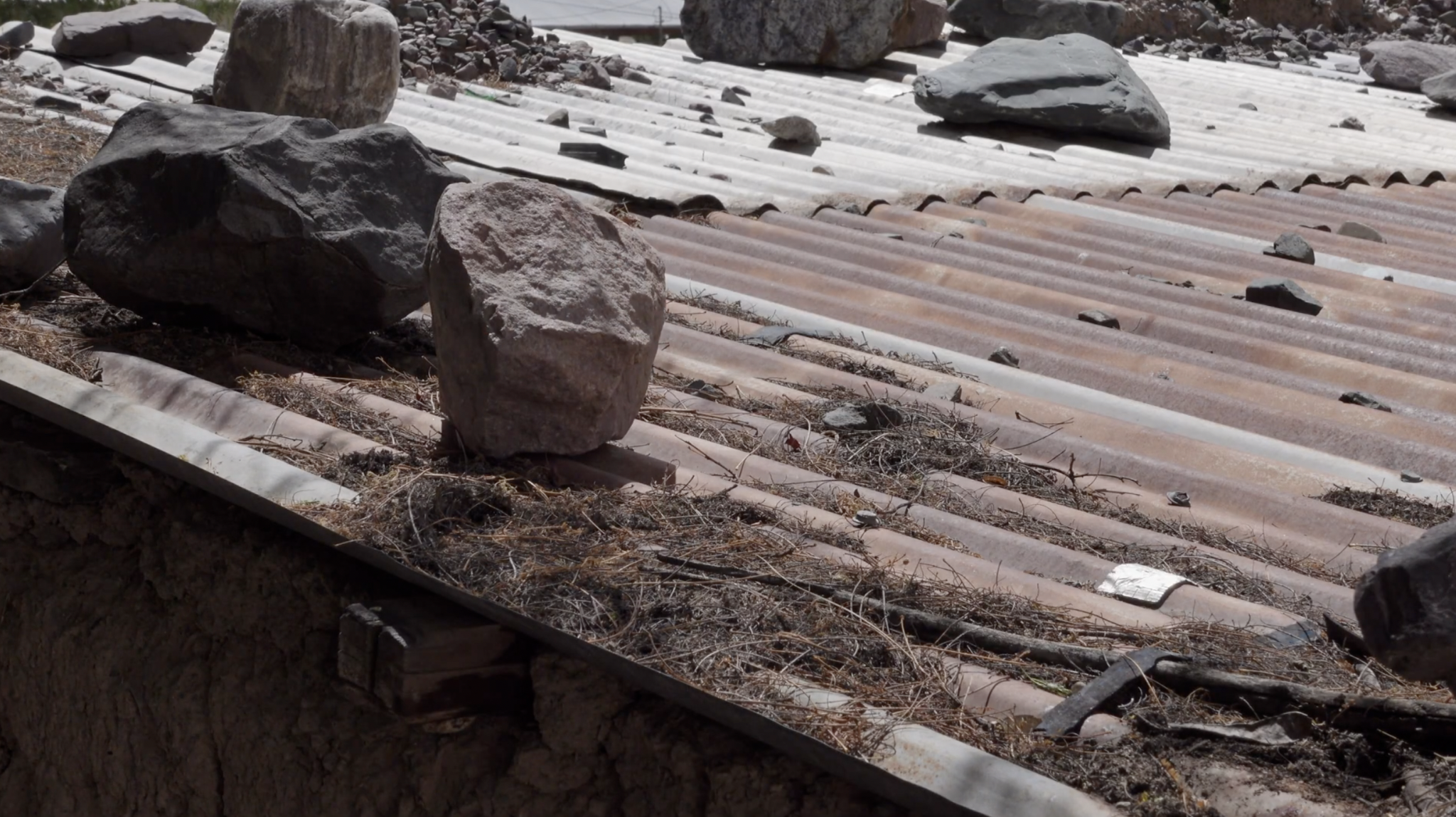


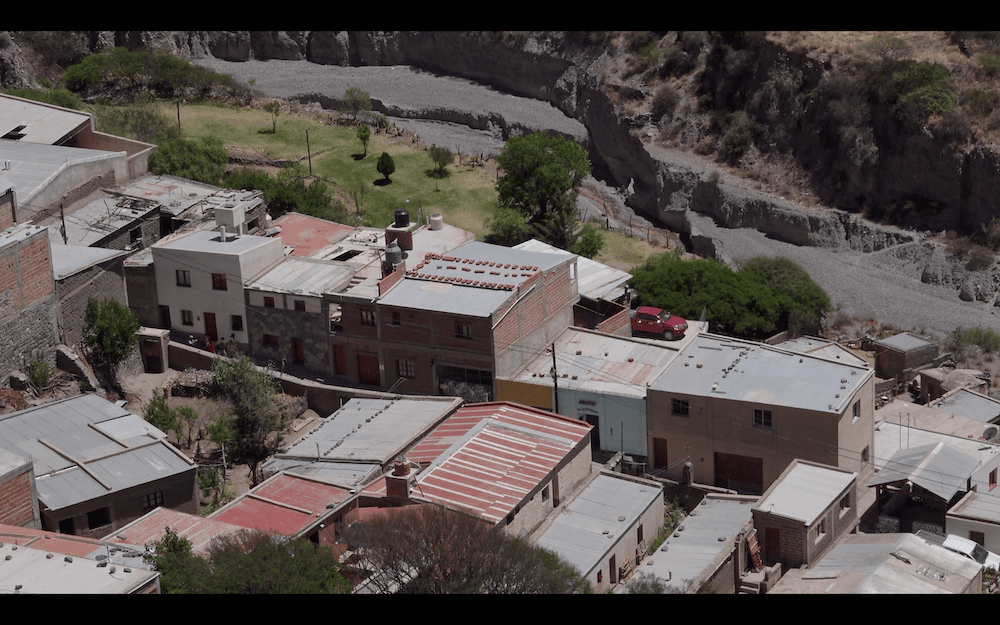
The video installation Dibujos para el cielo (Drawings for the Sky) articulates a performative action of profound political and ontological significance, placing the body and matter in a critical dialogue with the geographical environment. The location, Iruya (northern Argentina), is not merely a setting, but a territory with a specific historical and geopolitical significance, where life is lived in precariousness and ancestral persistence.
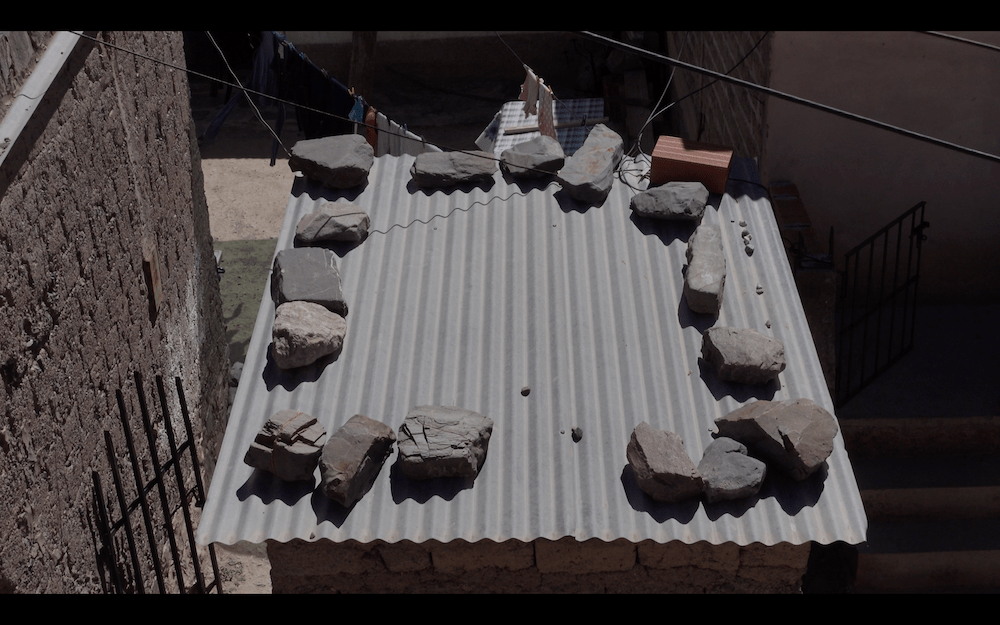
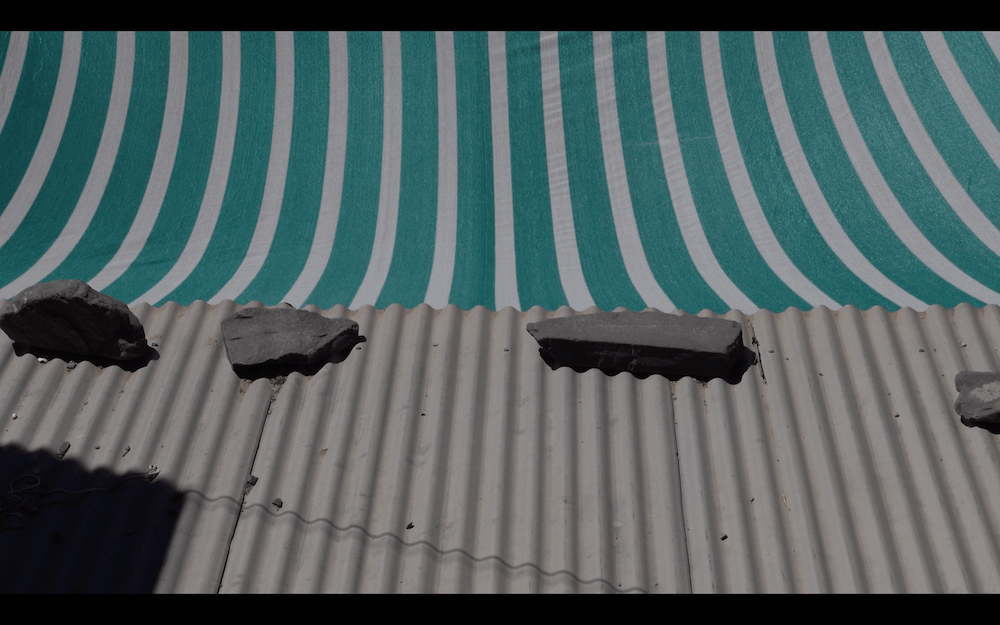
The work focuses on the gesture of placing stones on the roofs of houses. This action is doubly subversive. In its primary function, it fulfils a vital role: to precariously support the structures against the winds, symbolising the vulnerability inherent in communities in areas of climatic and socio-economic tension. But simultaneously, these stones trace lines and drawings, turning material necessity into an aesthetic language.
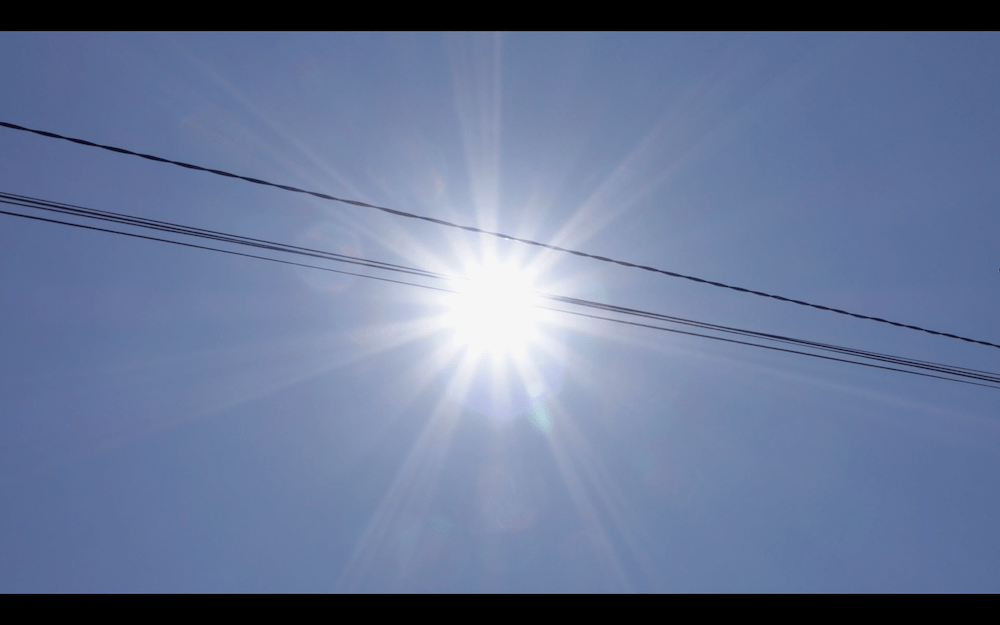
Herein lies the political core of the work: these drawings are only visible from the sky. This condition radically reverses the hegemonic logic of visibility and control. The art is not directed at the tourist gaze or the institutional gallery, but at a transcendent, ancestral or cosmic eye, suggesting that the true significance of resistance and popular culture can only be grasped from a higher or spiritual perspective, far from the colonising eye.
Rodríguez’s body becomes a political mediator that articulates height, weight and resistance. Each gesture is not only physical, but also an embodied thought that balances presence (the task of securing housing) and vulnerability (the constant threat of collapse). The action transforms the architecture of necessity into an act of aesthetic resistance, where matter (stones) and human labour come together to engrave a silent and powerful message on the landscape. It is the memory of permanence inscribed in the earth, a poetic strategy to secure life and affirm identity in the face of the forces of oblivion and destruction. The work is a map of cultural persistence and a geopoetics of the common.
Victor Lopez Zumelzu
 NICOLAS RODRIGUEZ