MOSAICO / Fragmentos e historias
MOSAIC / Fragments and stories
Earth, straw, and water
Variable Measurements
Museo de Arte Español Enrique Larreta
Buenos Aires, 2025
Curated by Silvina Amighini
Tiles: Earth, Straw, Water, Time
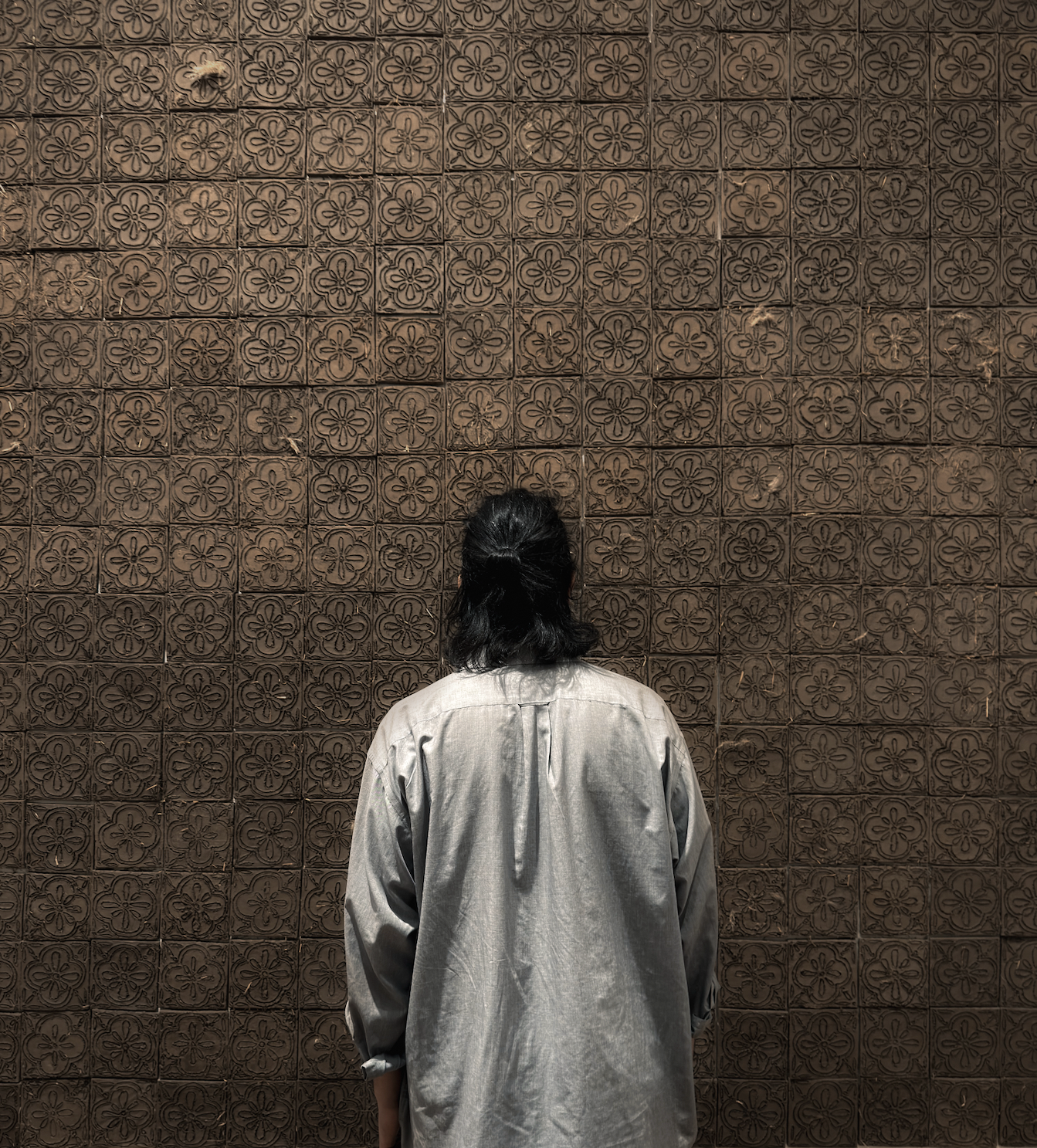
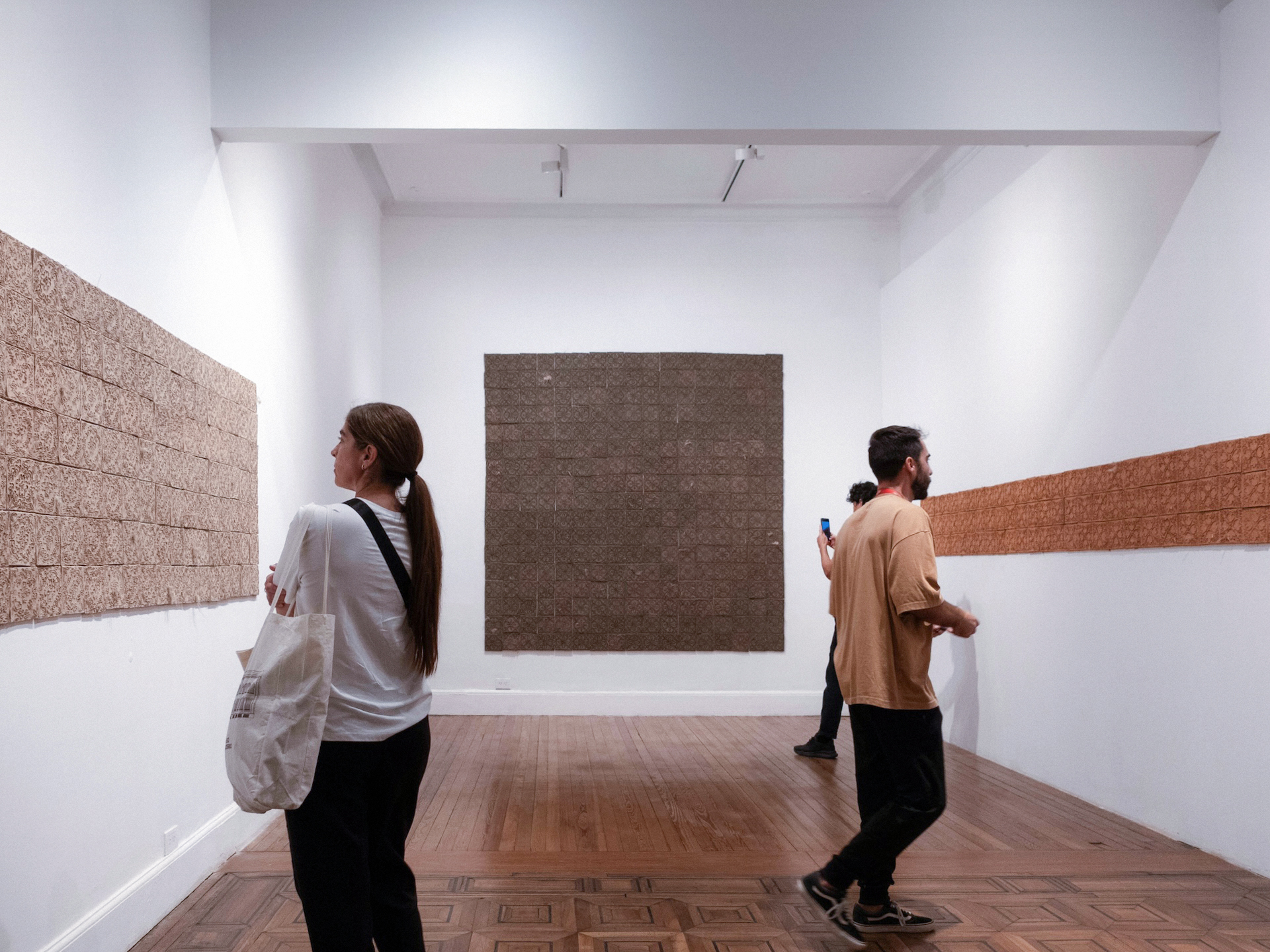
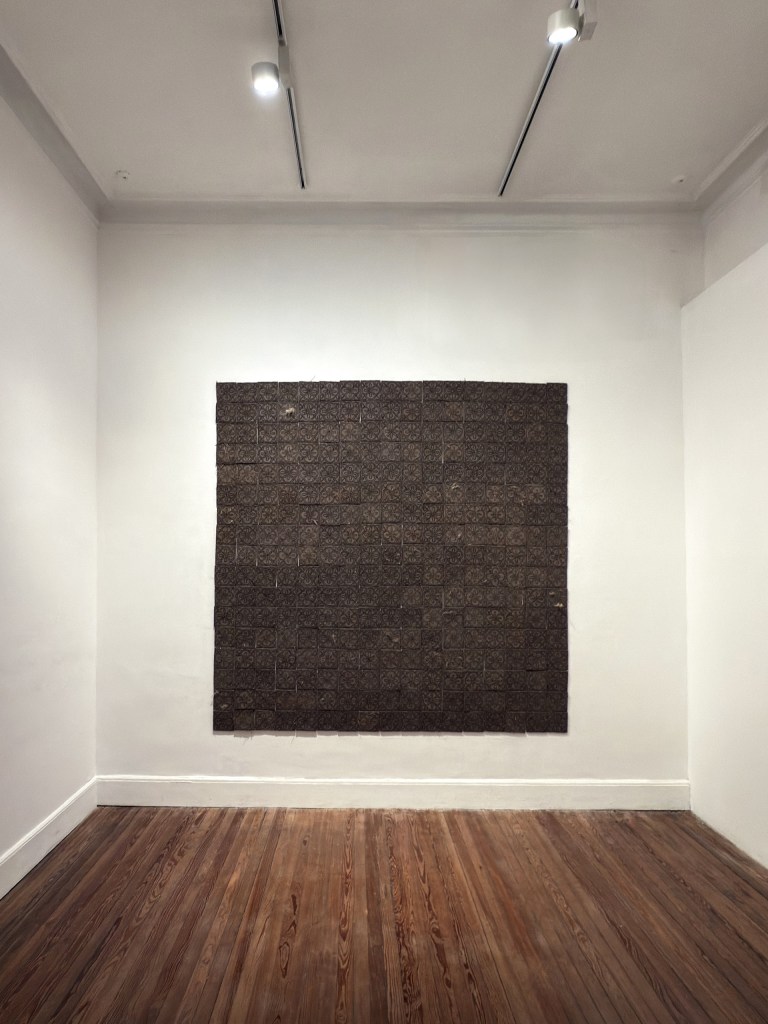
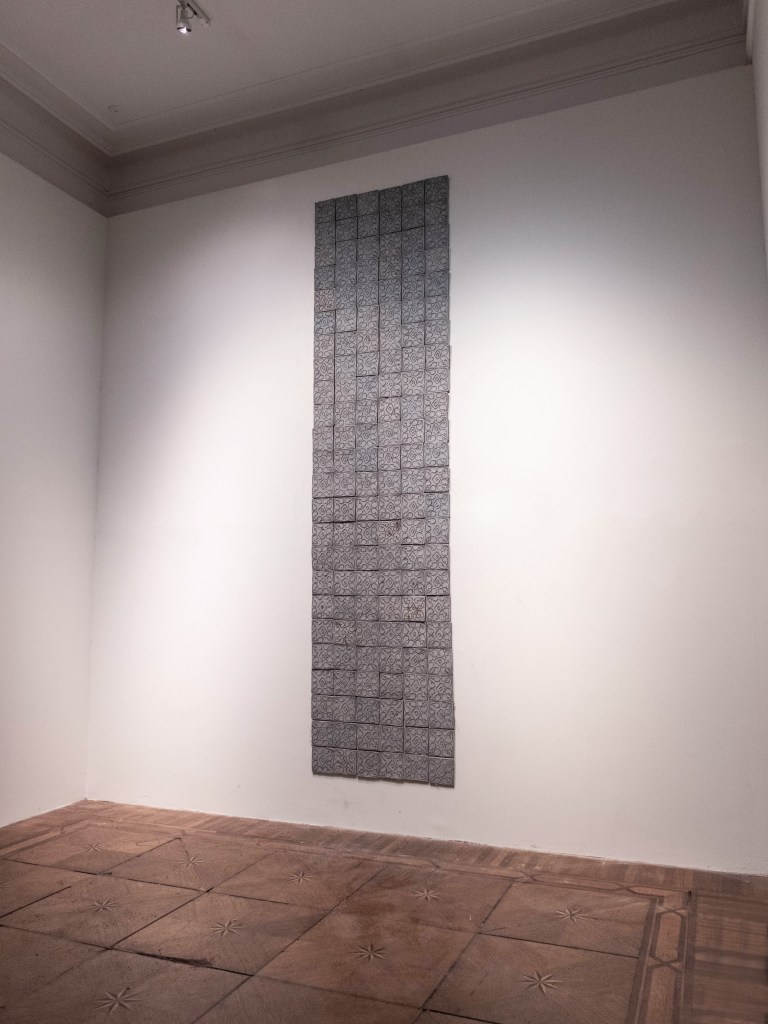
The exhibition presented here builds a bridge between the tradition of tile-making and the present-day practice embodied in the work of Nicolás Rodríguez. It proposes a journey through time, beginning with pieces from the museum’s collection, created during the era of conquest and colonization, when Portuguese and Spanish settlers brought techniques and designs to the Americas. Soon after, Indigenous, African, and mestizo artisans began crafting them in their own ways. A midpoint in this timeline takes us to the early 20th century, when Enrique Larreta commissioned tiles made in the style of the old ones to incorporate into his home. It is against this historical backdrop that Rodríguez’s panels unfold—a dialogue that both acknowledges and distances itself from the heritage of traditional tilework.
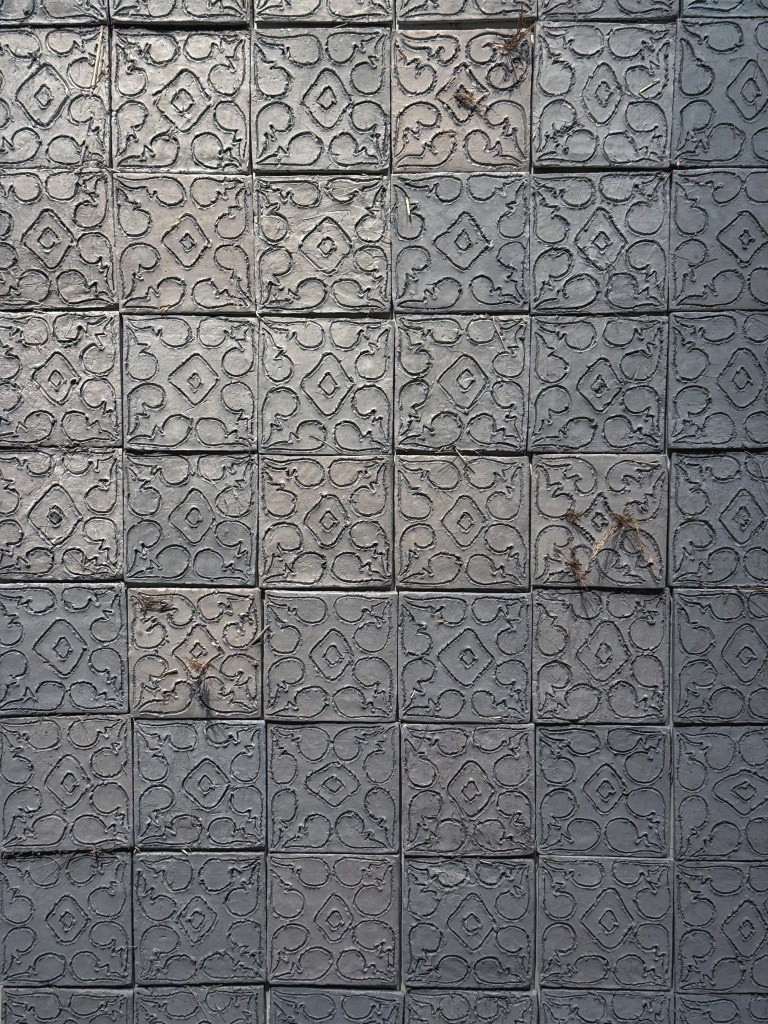
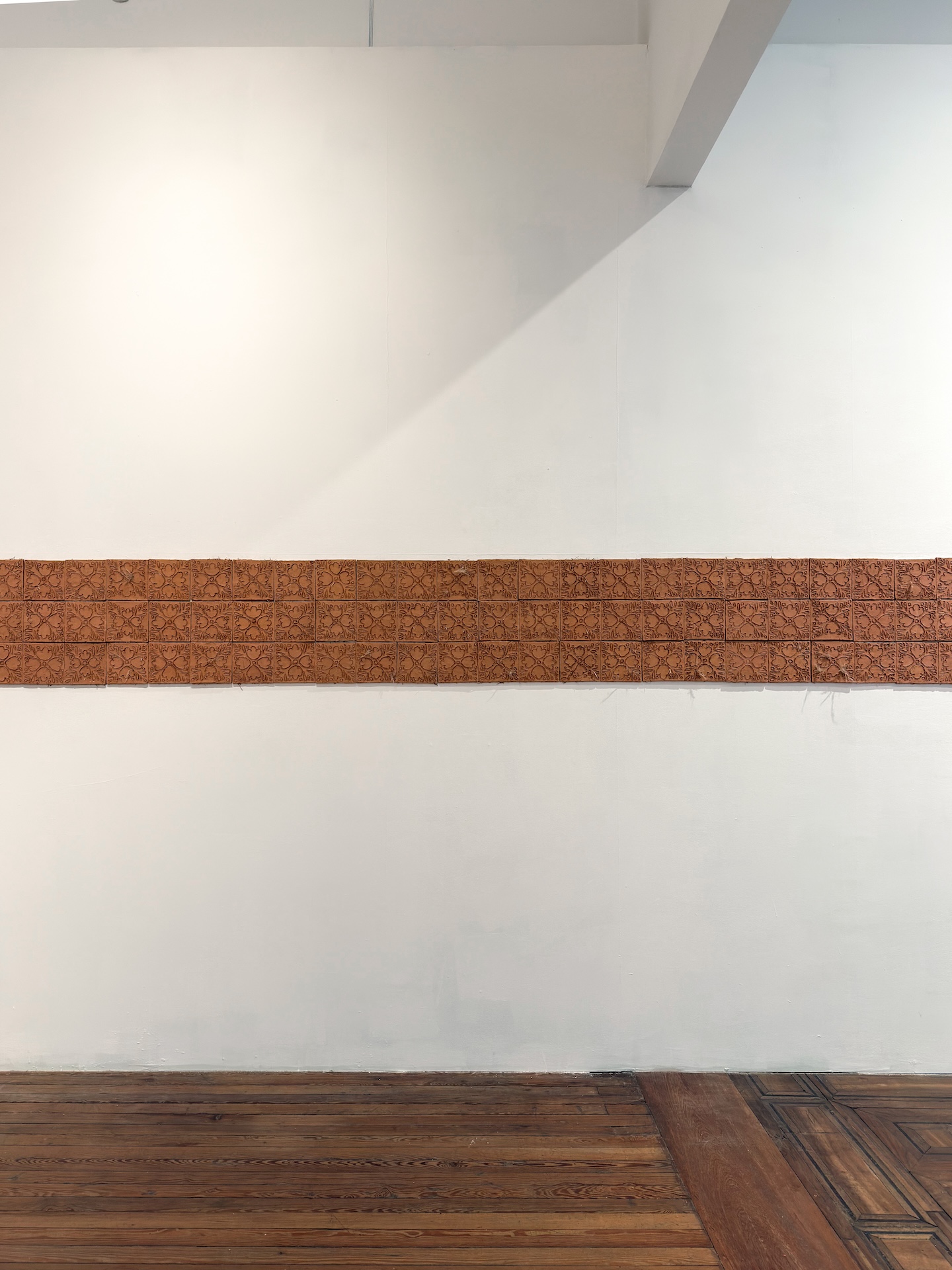
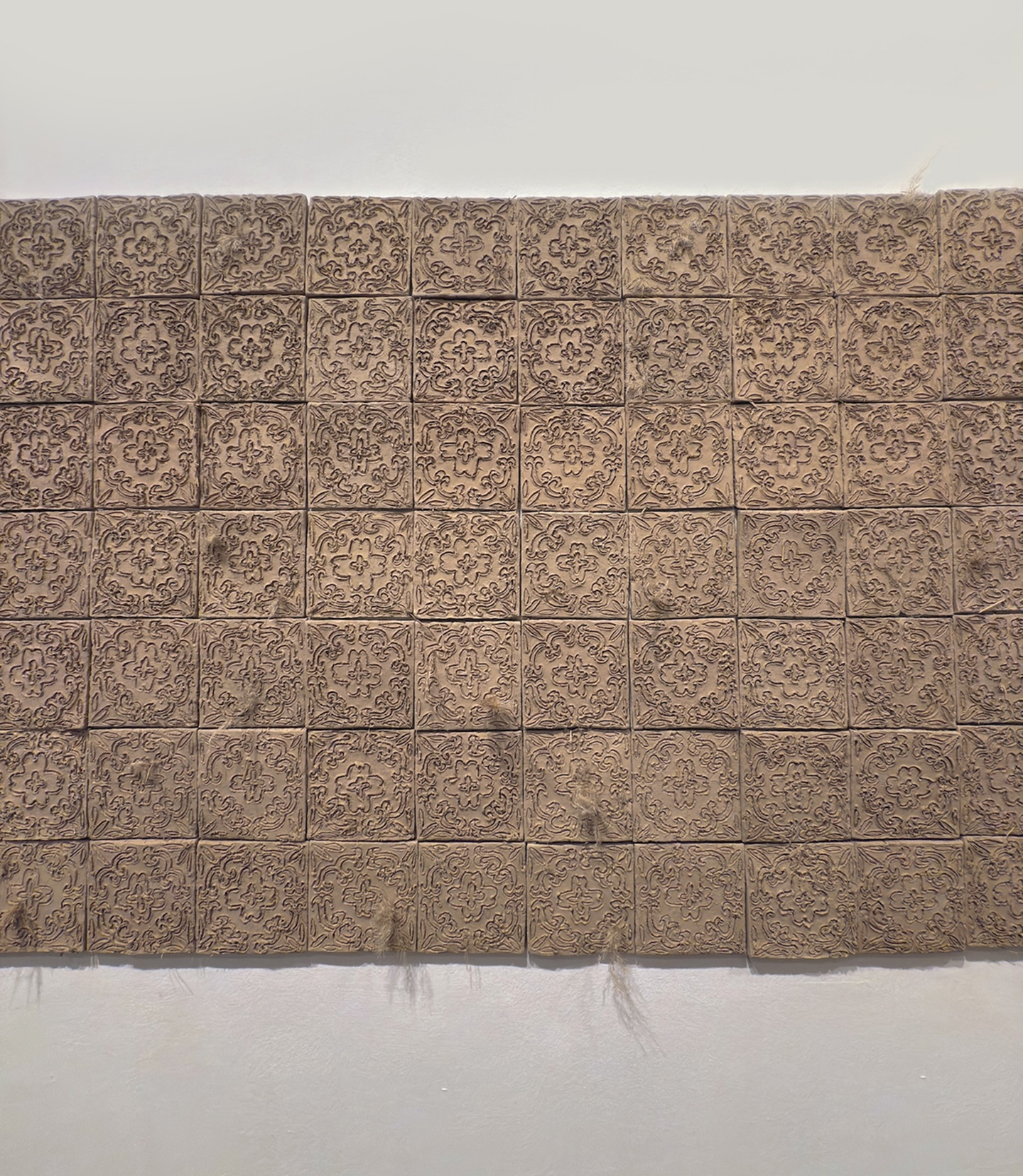
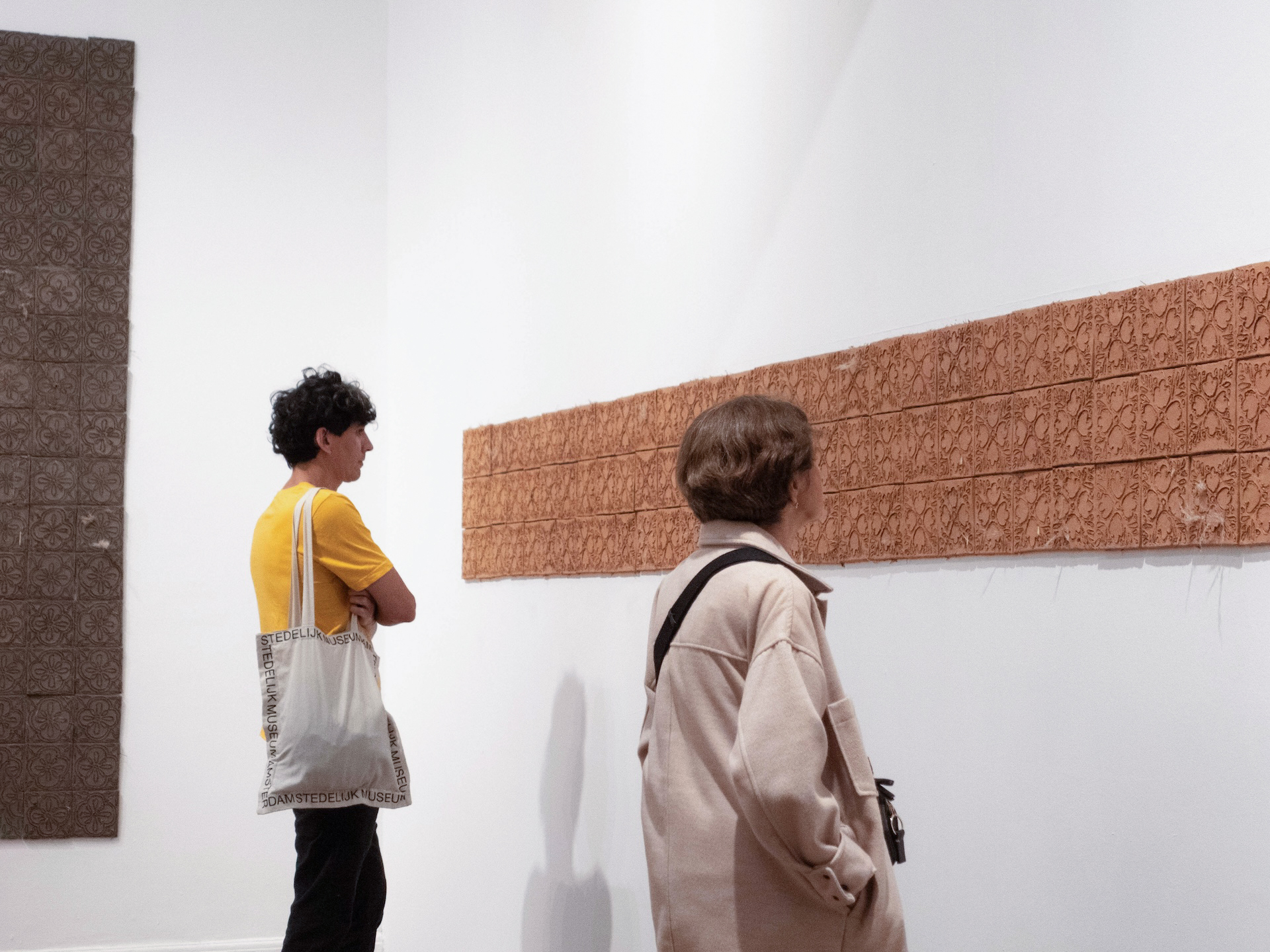
His proposal emerges from a loving collaboration of material, technique, and design. He does not reproduce old tiles nor extract their patterns to insert into his own imagery. He does not engage in representation because his aim is not to evoke missing tiles. Nicolás creates new objects that carry the weight of the old—that contain and renew it. Or rather, of what is bygone. Because the materiality of his works originates from the ancestral substrate of our nature: it is earth, it is straw, it is water.
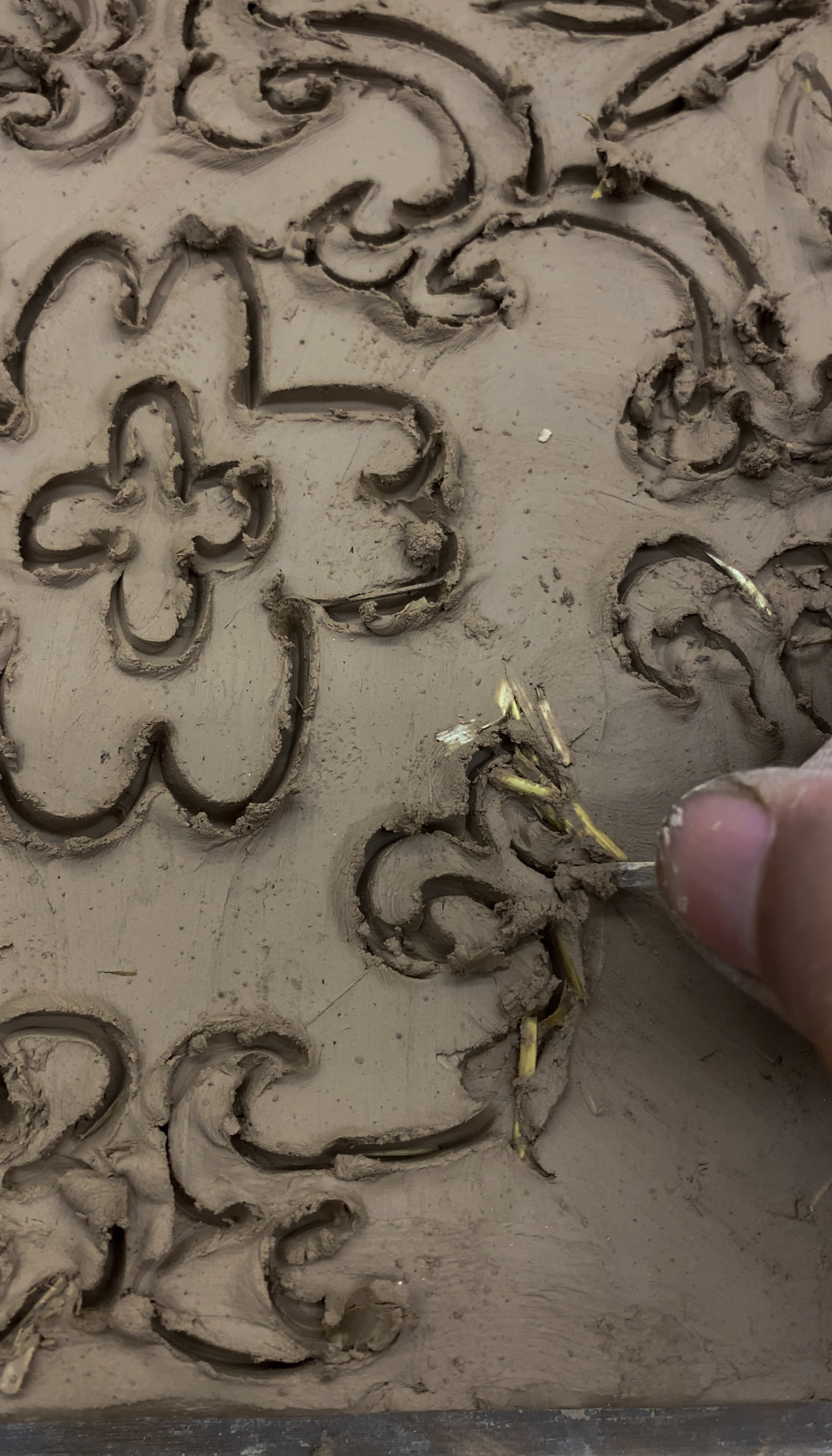
Through a process involving time—that great shaper of all things—and thanks to a technique that weaves together ancient knowledge and experimentation, the artist kneads the adobe with which he will craft his mosaics.
He gives it the proper consistency and transforms it into a surface with the necessary thickness to be cut, according to calculated measurements, into the individual pieces of these large panels. These humble parts of a greater whole, which integrates them and gives them meaning, do not represent anything—they are purely present, simply themselves. They are what has happened and what endures.
And this is possible because, even though his designs repeat, they are never identical. Inspired by the vegetal motifs of colonial American tilework, they are the result of a synthesis that distills their essential line—the one that can be traced on fresh adobe with a simple stick. This gesture, like the search for the right soils and the patient task of kneading, speaks to the manual labor and physical involvement of the artist in the making of these pieces, following a virtuous fusion: thinking through making, and making through thinking. Thus, the manual aspect does not contradict the conceptual framework of the work; on the contrary, it amplifies it.
Opaque and with a deceptively fragile appearance, Nicolás Rodríguez’s tiles invite us to observe them unhurriedly—but also to imagine them beneath our feet or above our heads, as an enveloping reminder of the marks that history has left on our land.
Marta Penhos

 NICOLAS RODRIGUEZ