NADANDO SE LLEGA AL BOSQUE
SWIMMING, ONE REACHES THE FOREST
Work commissioned by Fundación Por el Mar to be part of Monte León National Park, Santa Cruz, Argentina.
Installation
400 x 370 x 600 cm
Wood, earth, straw, sand, fabrics, sound, and video
2024
In the early days of human culture, art and science used to be an indissoluble matter. Although today they are clearly differentiated disciplines, they share a similar goal: to seek greater knowledge about how the contemporary world works, both from a practical level and a sensitive and emotional one. Undoubtedly, collaborative work on these levels of understanding is what we need to protect and preserve our planet. Science and art, from their different perspectives, are among the few disciplines that bring to light what is often invisible to the human eye, whether moments from the past or future, emotions such as fear or fragility, inaccessible areas like outer space or subatomic particles, dreams, fantasies, or underwater forests.
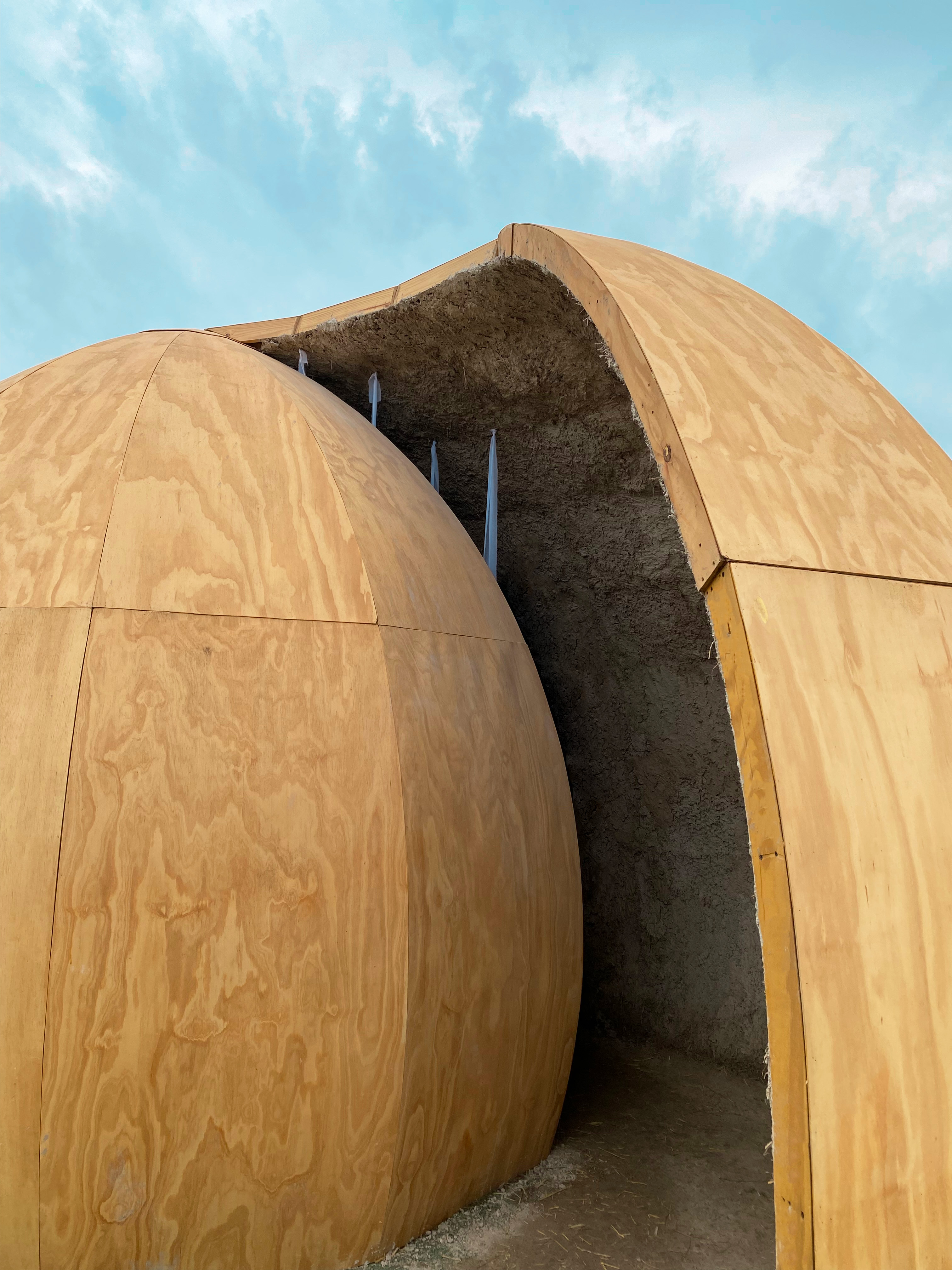
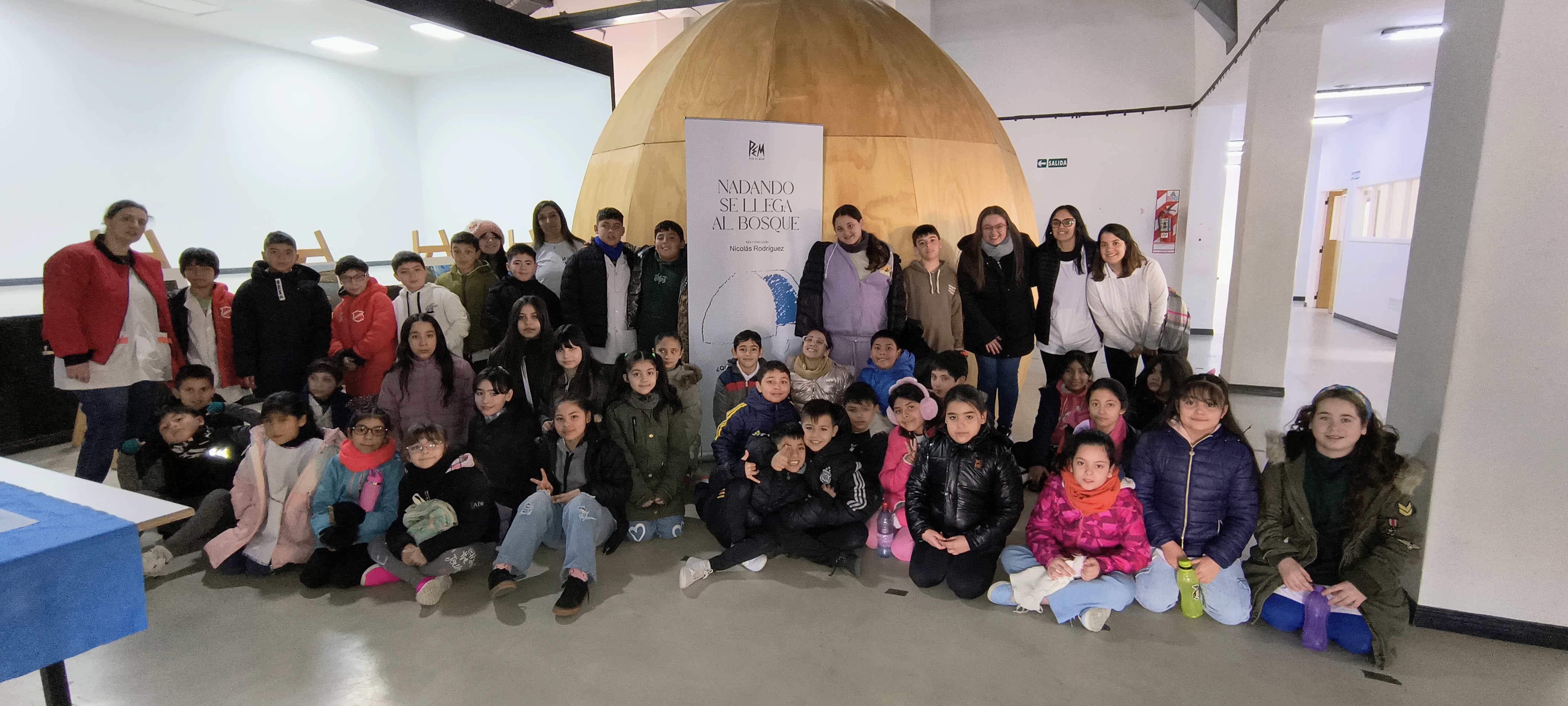
Nadando se llega al bosque (Swimming, One Reaches the Forest), by artist Nicolás Rodríguez, is both a giant sculpture and an immersive installation, as well as a refuge to project what we want to protect. If the native forests of macroalgae in the coastal areas of Santa Cruz and Tierra del Fuego are an ecosystem that provides refuge to hundreds of marine species, this installation is a terrestrial refuge for us to embrace that forest. It is an immersive capsule that not only transports us to an inaccessible and astonishing world but also to the origins of life and the future of the planet. These forests not only preserve the unique biodiversity that lives in our southern seas but their existence is fundamental if we want to halt the exacerbated acceleration of climate change and also preserve the species that live above sea level.
The work is a refuge, and that refuge is a home; like that of the hornero made of adobe, the home of a snail with its spiral shape, or like the Earth itself rotating on its own axis. But the center of that home is a forest underwater.
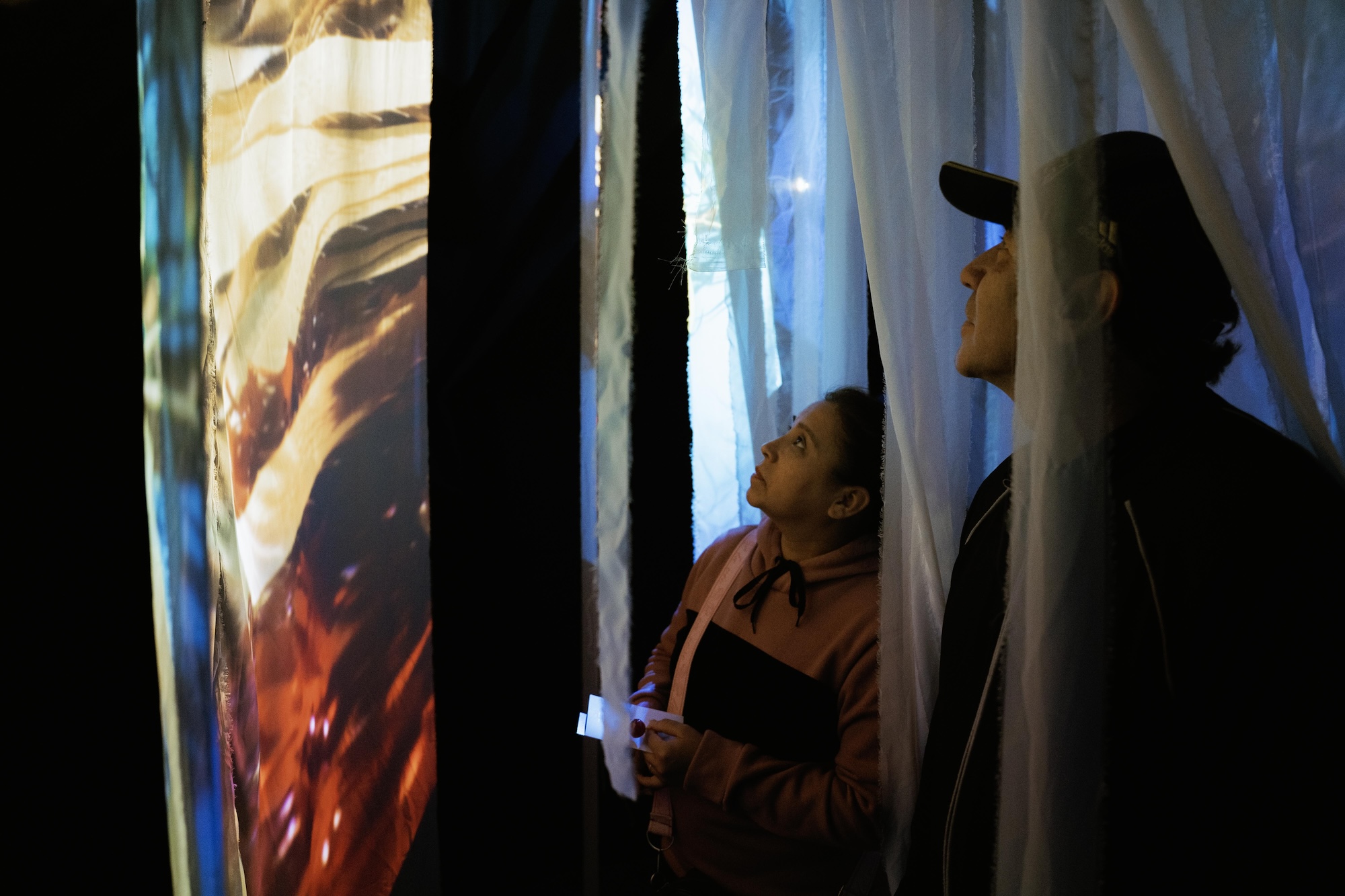
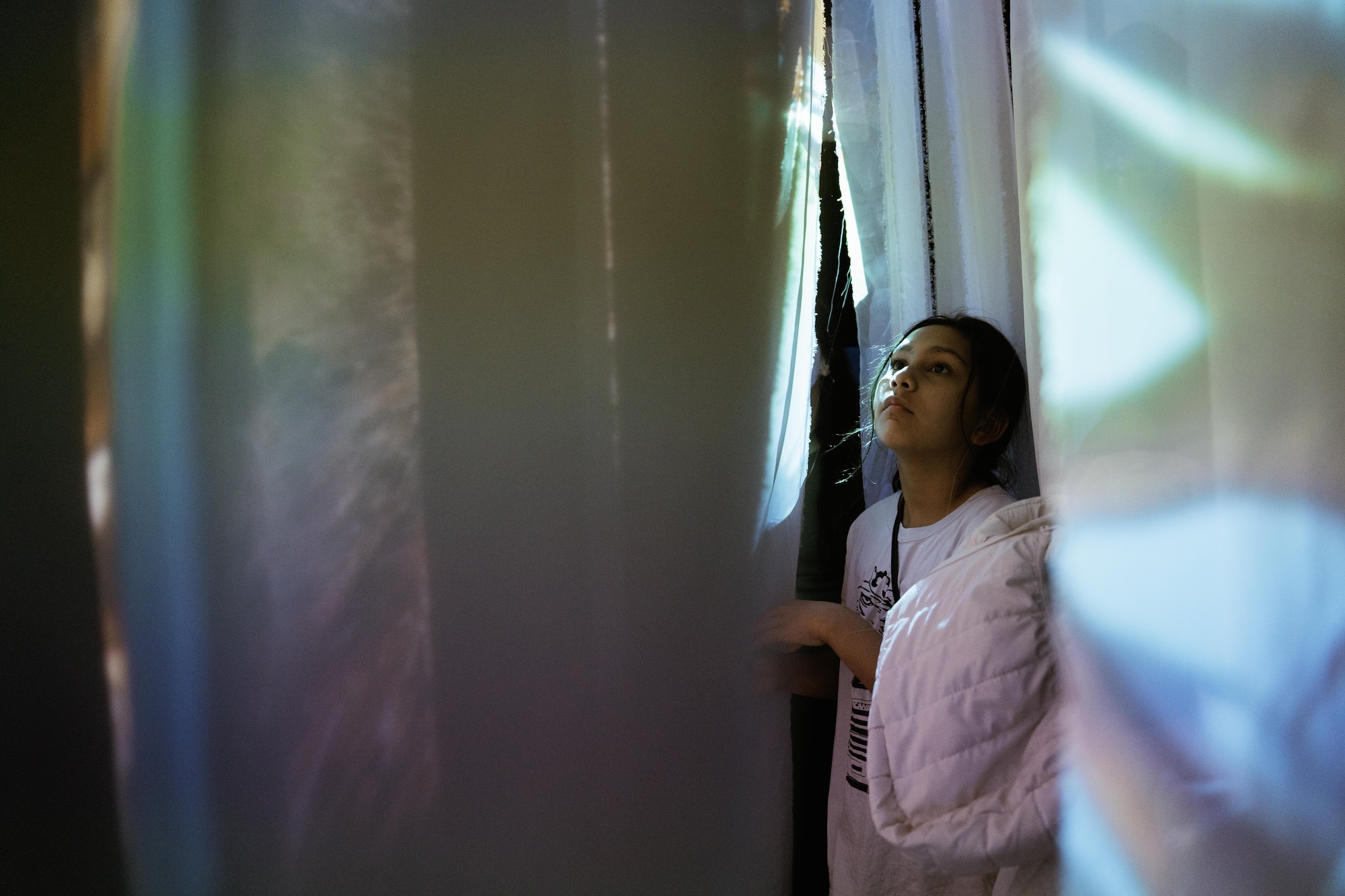
The immersion proposed by the work is swift; from walking surrounded by earth, we begin to swim to cross the forest. This physiological change also marks a change in perception. The eye must adapt to a different light and must work to reconstruct the fragmented image of what it does not know. That image is the result of the viewer’s imagination, constructed from the combination of audiovisual records of the forest, made by Cristian Lagger and Manuel Novillo, and the images that are formed and deformed in shreds of fabric, which fragment and come together with the very movement of those who cross and explore, who have the desire to reconstruct the forest with their own body and under their own gaze. In turn, upon entering the work, the auditory perception shifts from external noise to internal introspection. The pointed architecture of the forest house creates an acoustics that uses the visitor’s body as a resonance chamber, similar to the physical perception of sound underwater.
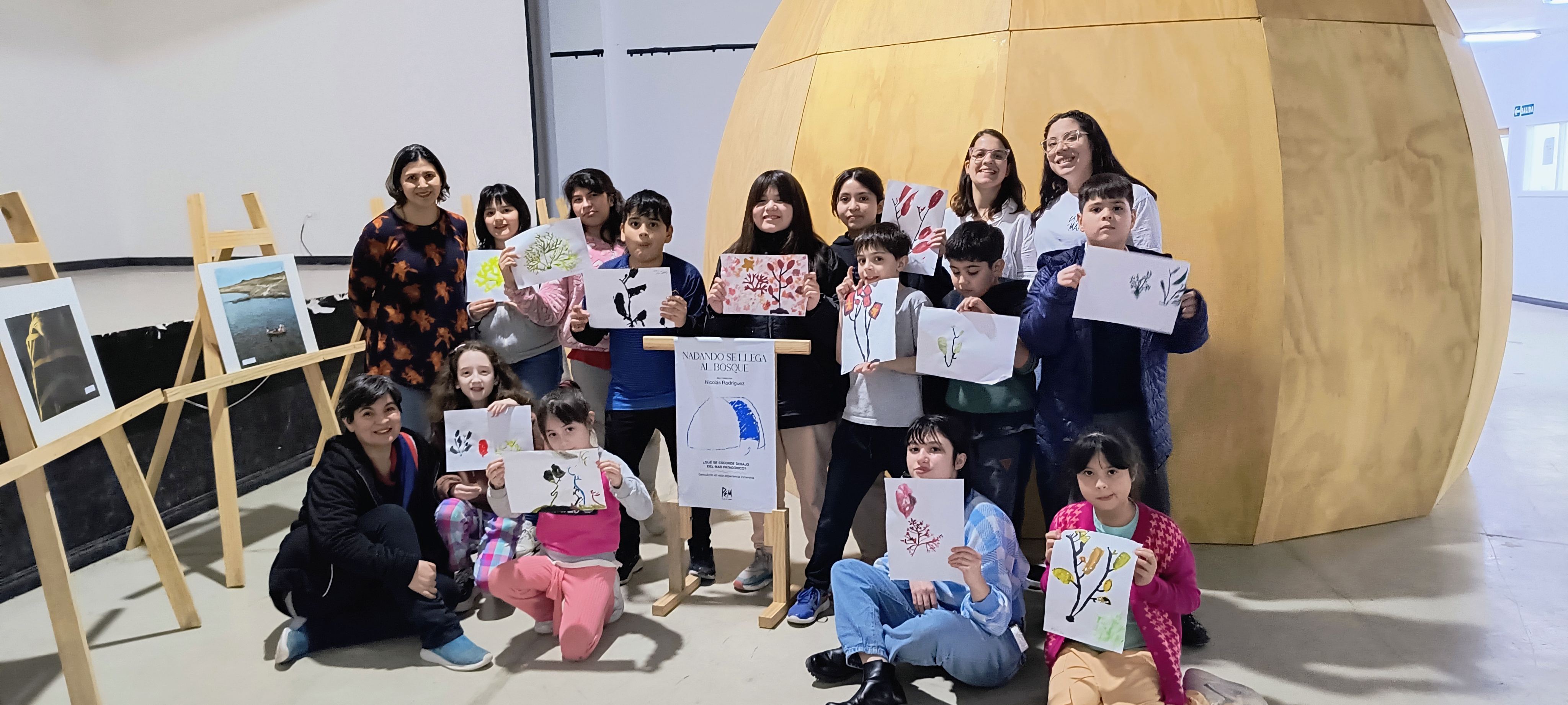
Nadando se llega al bosque is presented for the first time at Bioferia, but like the refuge of a snail, this forest’s is also nomadic. The sculpture was constructed modularly and has the potential to be disassembled, moved, and easily reassembled. It has the capacity to grow or shrink in scale. To convert the forest into an information center, a living library, or a teleportation machine where children from a rural school or visitors to a National Park can immerse themselves in the underwater forest. The work is a capsule that provides us with greater knowledge of the world, both from science and from art. It offers specific knowledge about one of the gears that sustain our planet; a gear that we are unaware of because it is hidden from view, but is as foundational to our existence as it is essential for our survival.
Javier Villa


 NICOLAS RODRIGUEZ